Our story

Keyword: PASSION

Tenuta Pizzone was founded in 2019, when the Vistarini family decided to renovate a portion of the newly established farm's farmhouse and dedicate it to an agritourism project. They began to share the estate's identity and history with their guests, sharing the fruits of the Mezzacane Winery, which also arose from a dream and a passion: to produce an ancient, signature wine.

Challenge

Every successful business is the fruit of hard work, and this applies to every sector. Intuition alone isn't enough to create a location that consumers will love. It's also important to research, reflect, plan, differentiate yourself, and much more. Our primary challenge is to revitalize our region, the Oltrepò, by revitalizing what were once the benchmark properties. Tenuta Pizzone is one of those. Vincenzo Mezzacane, the estate's longtime owner, has succeeded in implementing major projects aimed at improving the well-being of sharecroppers and the animals raised on the farm. For many years, it was recognized as the best medium-sized Italian farm, thanks to the innovative techniques introduced by Cavaliere Mezzacane. Now it's our turn!

Remembering the past

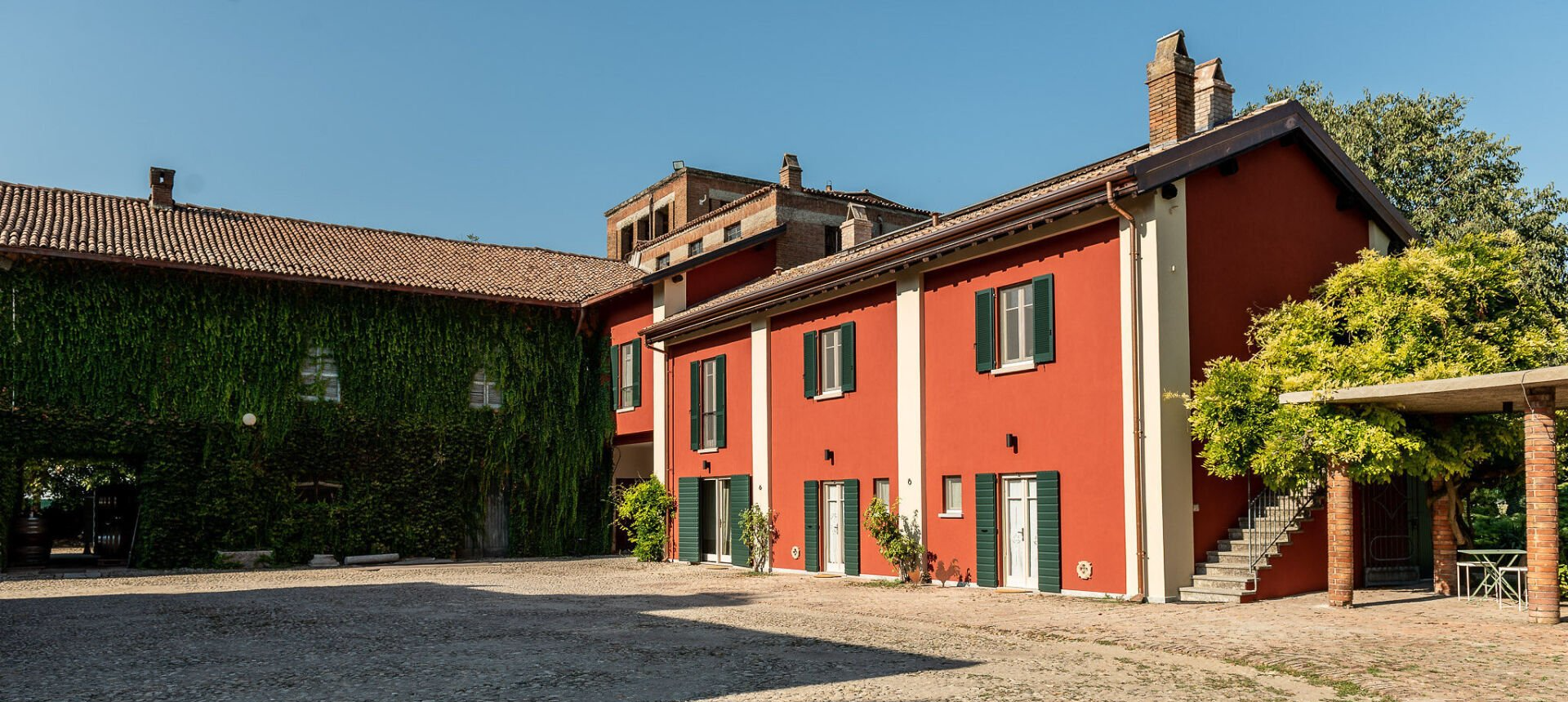
In the current Cascina Pizzone, one can find both the typical characteristics of the Po Valley Lombardy agricultural structures, as well as some traces of the innovative and enthusiastic personality of its founder.

Here, Vincenzo Mezzacane had started a thriving agricultural business, which he personally managed despite the significant commitments of the construction company "Garbarino Sciaccaluga Mezzacane." This was his primary business and indirectly provides a key to understanding the Cascina Pizzone complex: the Palace of Justice in Milan, the demolition work to isolate the Mausoleum of Augustus, the excavations at Largo Argentina, Termini Station, and the Olympic Stadium in Rome.

In Rivanazzano Terme, the historic Cascina Pizzone is being brought back to life by its new owners, with an ongoing architectural and entrepreneurial project opening it to the public and transforming it into a winery and agritourism facility: a place to celebrate, celebrate, and share events, culture, and the estate's own food and wine heritage.